Unit 1 – Introduction to the Bible
Time to READ:
What Kids will learn
✅God is starting point to understand the world. Not man.
✅God is the creator. He spoke and created the world from nothing by His Word.
✅Bible is the word of God in written form, which can do what God can do. How to read the Bible?
Hi there! 👋
Thank you so much for partnering with the J4K-52 mission to share Jesus with children in a way that truly connects with them. We’re excited to have you on this journey! This lesson is Chapter 2 of Unit 1 (NEW Account) for Flame Kids 🔥 (Ages 8 and above). Click here for the complete lesson plan.
Let’s get started! 🚀
Teacher Cue Card
This is a concise summary of the lesson structure, activities, and key messages for quick reference while teaching.
Lesson Structure
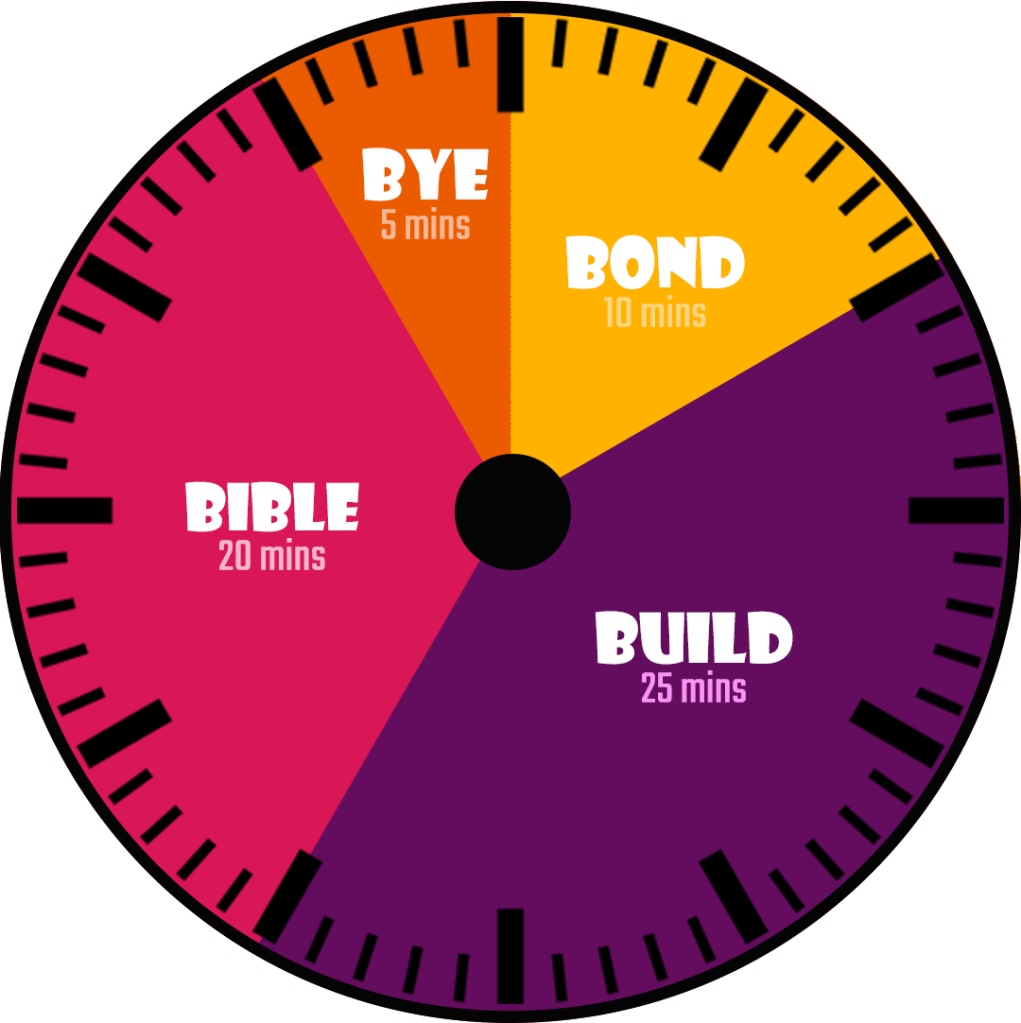
- 4 Segments: Bond Time → Build Time → Bible Time → Bye Time
- Bond Time: Spark and Flame in 2 separate groups
- Build Time: Spark + Flame kids together (mixed groups)
- Bible Time: Children split into their classes
- Bye Time: Children stay in their own classes
1. BOND TIME – Home Project Review [🔥🔥]
Ask children to share their homework:
👉 What would happen if there were no sun?
Say / Emphasise:
- God carefully thought through each element of creation
- If even one element was missing, life could not exist
- This discussion sets the stage for today’s lesson on how God created the world
2. Build TIME – Garden Project [✨🔥]
- Form mixed-age groups (older kids with younger kids)
- Assign each group one day of creation from Genesis 1
- Ask groups to recreate their day by building a garden like Eden
- Use simple and natural materials
- Older children guide and help younger children
Purpose / Say:
- Even a small garden takes effort to create
- God created the entire earth with all living things
- We used materials that already existed
- God created everything from nothing
- God is a powerful and thoughtful Creator
3. Bible TIME – About the Bible [🔥]
Bible Portion: Genesis 1: 1- 25 | Romans 4:17
PART 1 – Creation by God’s Word (15 mins)
Activity:
- Recap the creation events.
- Ask “How did God create the world?“
- Answer: Through His Word
Talk Points:
- God created everything by speaking
- Read Romans 4:17
- God created without raw materials
- God’s Word is powerful
- We still have God’s Word today → the Bible
- Transition: Let’s learn what the Bible is and how to use it
PART 2 – What is the Bible? (10 mins)
Facts:
• 66 books
• 40+ writers, 1500 years
• No contradictions → God is Author
• OT: Creation → before Jesus
• NT: Jesus → future (Revelation)
• Most printed book
• Genesis–Deuteronomy by Moses
How to Read the Bible?
• No fixed rule
• New: John → Genesis → Revelation
• Others: Genesis → Revelation
• Read daily (verse or chapter)
Why Read the Bible?
• Living Word of God
• God speaks through it
• Shows our heart
• Helps us know God & our purpose
Conclusion
• Encourage owning a Bible
• Encourage daily reading
4. BYE TIME – Wrap-Up & Home Task [🔥]
- Next session: How humans were created
- Home Project: Research using the Bible / Google / AI / your teacher
Question: Did humans come from monkeys?
Detailed Notes
Use the links below to view the details for each session segment.
10 mins: [🔥🔥]

Activity: Begin by revisiting last session’s homework: “What would happen to Earth if there were no sun?” Invite children to share what they discovered.
Talk Point: Without the sun, Earth would be dark and extremely cold. Plants would not grow without sunlight, there would be no food for animals or people, and over time all life would disappear, leaving Earth frozen and lifeless. This shows how God must have thought through each element of the creation, that even if one was missing life could not be.
Transition into today’s lesson by saying: In this session, we will learn how God created the Earth—and you will notice that light was the very first thing He created.
25 mins: [✨🔥]
Activity:
- Divide the students into 6 small mixed-age groups. Each group should include some SPARK kids (below 8 years) and some FLAME kids (8 years and above). Older children should guide and help the younger ones during the activity.
- Write numbers 1 to 6 on small slips of paper and let each group pick one. The number they choose will decide the day of creation (Genesis 1) they will recreate.
- Create a large “garden space” in the center of the room by placing a few chart sheets on the floor. This will be the base where all groups work together to build the garden.
- Keep all materials in one common place—such as sand, cotton, maida dough or play clay (for animals and birds), blue paper or powder (for water), newspapers, etc.
- If you have outdoor space, use it! Kids can use real grass, stones, leaves, and flowers. If not, collect a few natural items beforehand.
- For large groups, use one chart per 30 kids. Each chart becomes a separate garden.
- Kids will use the materials provided to create their part of the creation on the common chart area.
- Finally, ask each group to share their part of the creation with everyone.
Talk Point: Many of us worked together to create one small garden, and it still needed so many things. Now imagine creating the entire earth—with land, water, plants, animals, and people. We used materials that already existed, but God created everything from nothing. This shows how powerful and amazing our Creator God truly is.
20 mins: [🔥]
Bible Portion: Genesis 1: 1-25, Romans 4:17
Part 1:
Recap each day of the creation the kids found out in Build Time.
Day 1: God made light. (Genesis 1:3–5)
Day 2: God made the sky. (Genesis 1:6–8)
Day 3: God made land, seas, and plants. (Genesis 1:9–13)
Day 4: God made the sun, moon, and stars. (Genesis 1:14–19)
Day 5: God made birds and fish. (Genesis 1:20–23)
Day 6: God made animals and people. (Genesis 1:24–31)
Day 7: God rested. (Genesis 2:1–3)
Talk point: Based on today’s reading, how do you think God created the world? (Answer: Through His Word) (Ask a child to read Romans 4:17) This verse tells us that God created everything without using any raw materials. Can you imagine how powerful God’s Word is? Do we still have God’s Word with us today? Yes! God wrote down His words, and we call it the Bible. In the next part, we’ll learn how the Bible came to be and how we can use it in our lives.
Part 2:
What is the Bible?
- The Bible has 66 books
- It was written by over 40 people across 1,500 years
- Many authors never met each other, yet the message does not contradict—showing that God is the true Author who inspired them
- The Bible has two parts:
- Old Testament: From creation to the time before Jesus came
- New Testament: From the birth of Jesus onward, including Revelation, which speaks about the future
- The Bible is the most printed book in the world
- The first five books, including Genesis, were written by Moses, who met God face to face and received the account of creation directly from Him
How to read the Bible?
- There is no fixed rule—you can read from the beginning or start anywhere
- For new readers: begin with the Gospel of John, then read from Genesis to Revelation
- For regular readers: start from Genesis and read through Revelation
- Read one verse or one chapter a day—how much you read depends on your curiosity
Why to read the Bible?
- The Bible is the living Word of God
- When read sincerely, God speaks to us through it
- It reveals truth about God and also about ourselves—like a mirror for the heart
- God promises, “Whoever seeks Me will find Me”—the Bible helps us understand God, His creation, and why He made us
Conclusion: Encourage every child to own a Bible. Share simple ways they can get it if they don’t have one and motivate them to read it daily.
5 mins: [🔥]
Inform the children that they will learn how humans were created in the next session. Before then, ask them to research using Bible/ Google/ AI/ their teacher
👉 Did humans come from apes?
Quick Links
Download the templates required (if any) for the lesson here:
Reference Links
Use the links below if you want to further study/research for the lesson:
In The Beginning Was the Word (The Chosen Scene)
https://youtu.be/Xz_QEYwerkw?si=TwBbzShRwCsmH2dI
Notice Board

Each lesson does not have a separate memory verse. Instead, children are encouraged to memorize entire chapters or Bible portions. For Unit 1 (New Account), the memory portion is
Psalm 33
We would love to hear about your experience!
Would you take a moment to share what went well, what could be improved, or anything new you tried that worked especially well?
Thank you! 💖
 Jesus for Kids (J4K)
Leave a comment